


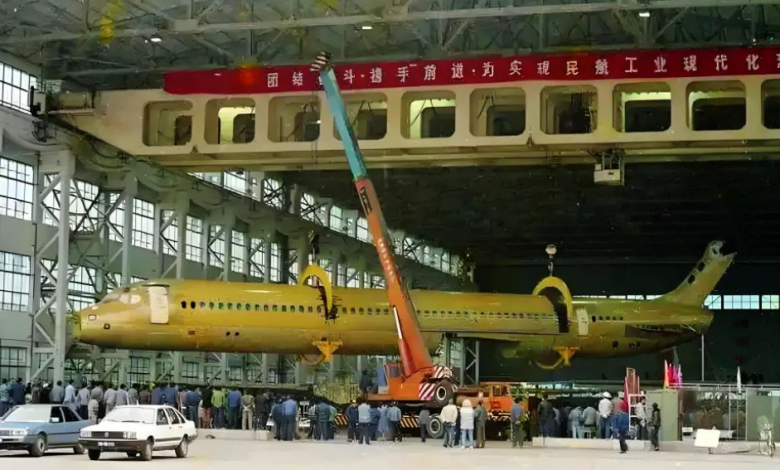
China’s aviation industry has seen remarkable growth over the past few decades, and at the heart of this progress is the Chengdu Aircraft Industry Corporation (CAC), a cornerstone of the country’s aerospace sector. As a subsidiary of the Aviation Industry Corporation of China (AVIC), CAC has played a pivotal role in developing advanced military and civilian aircraft, earning global recognition for its cutting-edge designs and technological breakthroughs.
This article explores CAC’s history, key achievements, flagship aircraft, and future innovations, highlighting why it remains a leader in aviation manufacturing.
A Brief History of CAC
Founded in 1958, CAC was established as part of China’s push to develop an independent aerospace industry. Initially focused on producing Soviet-designed aircraft under license, the company gradually transitioned to independent research and development (R&D), marking the beginning of China’s self-reliant aviation era.
Key Milestones:
- 1960s–1970s: Produced the Chengdu J-7, a licensed version of the Soviet MiG-21.
- 1980s–1990s: Began developing indigenous fighters like the J-10, China’s first modern fourth-generation fighter.
- 2000s–Present: Expanded into stealth technology (J-20), unmanned aerial vehicles (UAVs), and commercial aviation partnerships.
Today, CAC is not only a major supplier for the People’s Liberation Army Air Force (PLAAF) but also a key player in global aerospace collaborations.
Flagship Aircraft: CAC’s Engineering Marvels
1. Chengdu J-20 “Mighty Dragon” (第五代战斗机)
- Role: 5th-generation stealth fighter
- First Flight: 2011
- Status: Operational since 2017
- Key Features:
- Low radar cross-section (stealth technology)
- Supercruise capability (supersonic without afterburners)
- Advanced avionics and sensor fusion
The J-20 is China’s answer to the US F-22 Raptor and F-35 Lightning II, making CAC one of the few companies worldwide capable of producing fifth-gen fighters.
2. Chengdu J-10 “Vigorous Dragon” (歼-10)
- Role: 4th-generation multirole fighter
- First Flight: 1998
- Key Features:
- Delta-wing design
- Fly-by-wire controls
- High maneuverability
The J-10 marked China’s shift from Soviet-influenced designs to indigenous fighter development, proving CAC’s engineering prowess.
3. Wing Loong UAV Series (翼龙无人机)
- Role: Unmanned combat aerial vehicle (UCAV)
- Variants: Wing Loong I, II, and III
- Key Features:
- Long-endurance reconnaissance and strike missions
- Exported to Middle East, Africa, and Asia
These drones have become a cost-effective alternative to US Predator drones, with growing demand in global defense markets.
4. Commercial & Civil Aviation Projects
While primarily known for military aircraft, CAC has also contributed to civil aviation, including:
- ARJ21 regional jet components
- Collaborations with COMAC on the C919 airliner
Innovations & Technological Advancements
CAC’s success stems from its commitment to R&D and modernization. Key areas of innovation include:
1. Stealth Technology
The J-20’s design incorporates radar-absorbent materials (RAM), angled surfaces, and internal weapon bays, reducing detectability.
2. Engine Development
While early J-20s used Russian engines, CAC is now testing indigenous WS-15 engines, aiming for full self-sufficiency.
3. Artificial Intelligence (AI) Integration
- AI-assisted pilot systems
- Swarm drone technology
4. Export Expansion
CAC has successfully marketed the JF-17 Thunder (co-developed with Pakistan) and Wing Loong drones to international buyers.
Challenges & Global Competition
Despite its achievements, CAC faces challenges:
- Dependence on foreign engine suppliers (though improving with WS-15).
- US sanctions limiting access to some advanced technologies.
- Competition from Lockheed Martin, Boeing, and Dassault.
However, CAC’s rapid advancements suggest it will remain a major player in global aviation.
Future Prospects
CAC is reportedly working on:
- 6th-generation fighter concepts
- Next-gen UAVs with AI autonomy
- Hypersonic aircraft research
With strong government backing and a growing talent pool, CAC is poised to shape the future of aviation.
Conclusion: A Rising Power in Aerospace
From licensed Soviet-era jets to the J-20 stealth fighter, CAC has transformed into a global aviation leader. Its blend of military innovation, drone technology, and civil aviation contributions ensures China’s place in the aerospace industry for decades to come.
Key Takeaways:
✔ J-20 stealth fighter rivals US fifth-gen jets.
✔ Wing Loong drones dominate export markets.
✔ Future projects (6th-gen fighters, hypersonics) signal continued growth.
For aviation enthusiasts and defense analysts alike, Chengdu Aircraft Industry Corporation is a name to watch. 🚀✈️
Would you fly on a CAC-designed passenger jet? Share your thoughts!


