


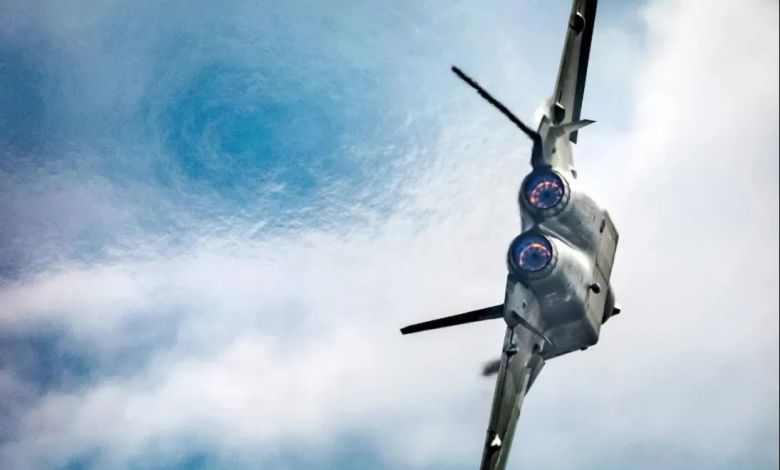
The Chengdu J-20 “Black Eagle” (威龙, Wei Long – “Mighty Dragon”) is China’s first fifth-generation stealth fighter, representing a major leap in the country’s military aviation capabilities. Developed by the Chengdu Aerospace Corporation (CAC) and entering service in 2017, the J-20 is designed to rival the U.S. F-22 Raptor and F-35 Lightning II.
This article explores the J-20’s design, technology, operational role, and global significance, shedding light on why it’s considered a cornerstone of China’s air dominance strategy.
1. Development & History
Origins & First Flight
- Project Launch: Early 2000s (first prototype revealed in 2010).
- Maiden Flight: January 11, 2011 (coinciding with then-U.S. Defense Secretary Robert Gates’ visit to China).
- Entered Service: 2017 (People’s Liberation Army Air Force, PLAAF).
Why Chengdu?
The Chengdu Aircraft Industry Group has a long history of producing advanced fighters, including the J-10 and JF-17 Thunder, making it the natural choice for China’s stealth fighter program.
2. Design & Stealth Features
The J-20’s design prioritizes low observability (stealth), supercruise, and advanced avionics.
A. Exterior Design
- Diamond-shaped nose & chined fuselage (reduces radar cross-section).
- Serpentine air intakes (hides engine blades from radar).
- Internal weapons bays (avoids external payload drag).
B. Radar & Sensor Systems
- AESA Radar (Active Electronically Scanned Array): Detects targets beyond 200 km.
- EOTS (Electro-Optical Targeting System): Infrared tracking (similar to F-35’s system).
- Datalink Integration: Shares real-time battlefield data with other PLAAF assets.
C. Engine & Performance
- Current Engine: WS-10C (improved thrust, but not true 5th-gen performance).
- Future Upgrade: WS-15 (under development, expected to enable supercruise).
- Estimated Top Speed: Mach 2.0+
- Range: ~2,000 km (with internal fuel).
3. Weapons & Combat Role
Primary Missions:
✔ Air superiority (dogfighting & long-range engagements).
✔ Precision strike (anti-radiation & bunker-busting capabilities).
✔ Electronic warfare (jamming enemy radar).
Key Armaments:
- PL-15 (Beyond-Visual-Range Missile) – 200+ km range.
- PL-10 (Short-Range IR Missile) – High off-boresight targeting.
- Internal Bomb Bay – Can carry precision-guided munitions.
4. How It Compares to U.S. & Russian Stealth Fighters
| Feature | Chengdu J-20 | F-22 Raptor | Sukhoi Su-57 |
|---|---|---|---|
| Stealth | Moderate (RAM coatings) | Excellent | Moderate (less refined) |
| Engines | WS-10C (WS-15 pending) | F119 (supercruise) | Izdeliye 30 (newest) |
| Avionics | AESA + EOTS | AESA (older gen) | IRST + AESA |
| Weapons Bay | Large (6-8 missiles) | 4-6 missiles | 4-6 missiles |
| Cost | ~$110 million | ~$150 million | ~$70 million |
Key Takeaway: The J-20 is more advanced than the Su-57 but still lags behind the F-22 in thrust-to-weight ratio and stealth refinement.
5. Operational Deployments & Upgrades
A. PLAAF Service
- First Combat Brigade: 9th Aviation Brigade (Wuhu, East China).
- Deployments Near Taiwan & South China Sea (regular patrols).
B. J-20B (Upgraded Variant)
- Twin-Seat Version: For AI drone command (unmanned wingman operations).
- WS-15 Engine Testing: Expected to enter service by 2025.
C. Export Potential?
- Currently not for export (unlike JF-17), but Pakistan has shown interest.
6. Strategic Importance for China
The J-20 is a symbol of China’s military modernization, designed to:
✔ Counter U.S. air dominance in the Pacific.
✔ Project power over disputed regions (Taiwan, South China Sea).
✔ Deter potential adversaries with long-range strike capabilities.
U.S. Response: The F-35’s Asia-Pacific deployments and Next Generation Air Dominance (NGAD) program are direct counters to the J-20.
7. Weaknesses & Challenges
- Engine Reliability: WS-10C still lags behind Pratt & Whitney/Rolls-Royce.
- Stealth Limitations: Less refined than F-22 (especially rear RCS).
- Production Scale: ~100+ J-20s built (vs. 195 F-22s, 900+ F-35s).
Conclusion: The Future of the J-20
The Chengdu J-20 is a formidable 5th-generation fighter, though not yet a full equal to the F-22. However, with WS-15 engines, AI co-pilot systems, and drone teaming, it could soon close the gap.
For now, the J-20 solidifies China’s position as a top-tier air power—and a key player in the future of aerial warfare.


