


When the skies over Chengdu are clear, the distant West Ridge Snowy Mountain quietly reveals itself outside a studio window. For Dondrup, a Tibetan thangka artist, the snowy peaks stir sacred memories of Lhasa, the ancient city where his artistic journey began. But it is here in Chengdu—the sprawling, modern capital of Sichuan Province—that he continues his path of artistic and spiritual refinement. Once rooted in the bustling alleys of Barkhor Street near Jokhang Temple, his journey has found a new spiritual home among the tree-lined lanes of Wuhou District. Thangka art, a meticulous and sacred practice, has found new soil in this city of tech parks and tea houses, skyscrapers and shrines.
From Barkhor Street to Wuhou Alley: A Personal Pilgrimage
Dondrup first encountered Chengdu on a family trip for medical care in 2010. From the moment he landed, the city’s dual nature—its efficiency and spirituality—tugged at his heart. Bilingual hospital signs, the scent of yak butter from a nearby Tibetan shop, and familiar faces speaking his mother tongue made him feel seen. That same trip, he met a community of thangka practitioners nestled discreetly in the city’s old quarters, sharing techniques, chants, and meals.
Drawn by a deep yearning, he returned months later and never left. For him, relocating was more than a career move; it was an inward pilgrimage. Practicing his craft in Chengdu meant immersing himself in both tradition and transformation. It was thangka as ritual, yes, but also thangka as dialogue with a changing world.
Wuhou District: Ancient Lines in a Modern Grid
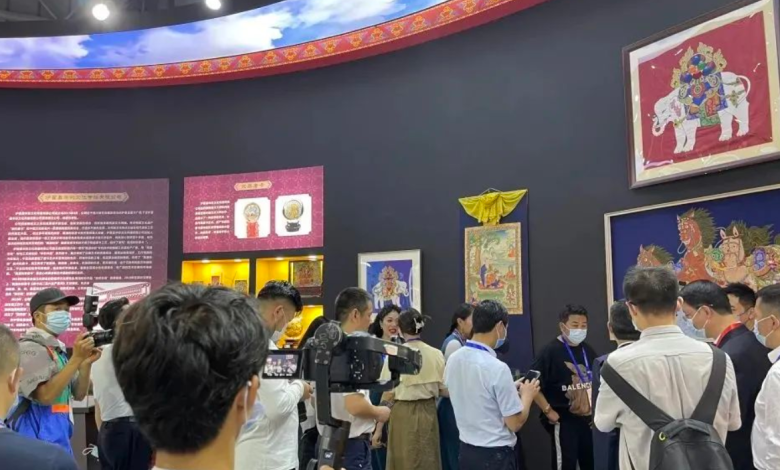
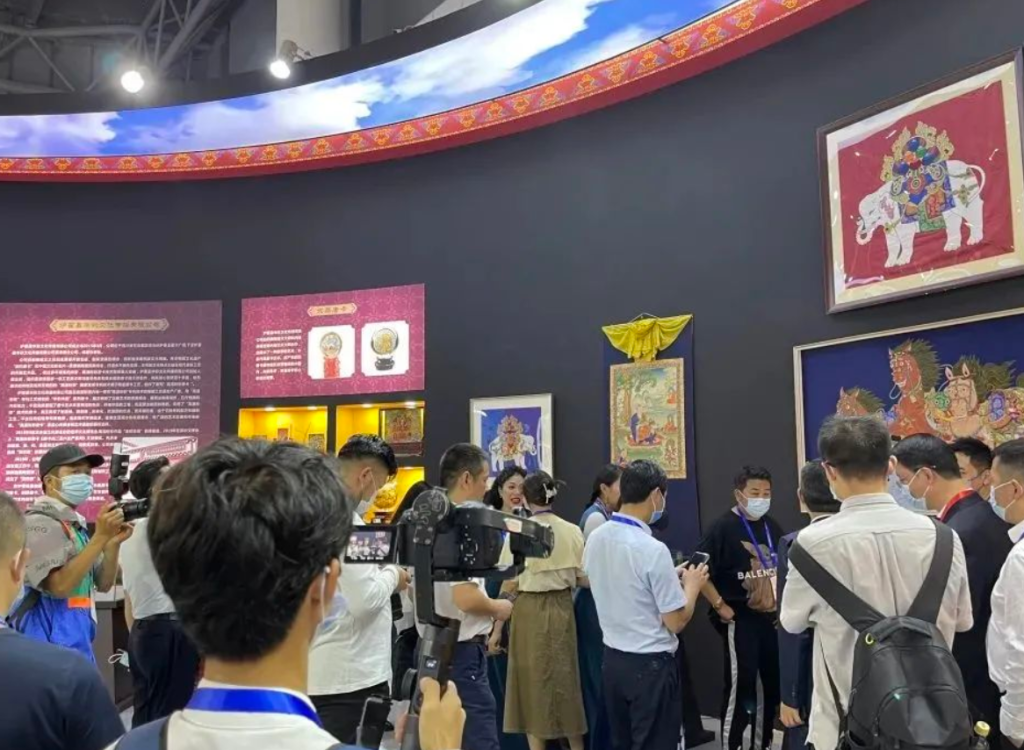
Wuhou is one of the earliest Tibetan settlements in Chengdu and remains a spiritual nexus for the community. Here, thangka artists can be seen setting up exhibitions in cultural centers or offering workshops in backstreet studios. Venues like the Wuhou District Cultural Hall have supported these artists through regular showcases, allowing passersby to witness art being born from devotion and discipline.
More importantly, Chengdu’s reputation as a “Park City under Snow Mountains” extends far beyond aesthetics. The city has hosted international events such as the Intangible Cultural Heritage Festival and Western China Expo, where thangka art stood shoulder to shoulder with global folk traditions. These platforms have enabled local artists to gain worldwide attention without compromising the spiritual essence of their work.
The City as a Muse: Urban Vibes, Sacred Lines
For many, it may seem paradoxical that an art form so anchored in contemplation thrives in a city buzzing with innovation. Yet, Chengdu’s chaotic harmony is fertile ground for artistic renewal. The artist’s day may begin with a silent meditation before a canvas and end with a chai chat among software engineers in a café.
As Dondrup often says, “Every line I draw in a thangka is a breath. Chengdu lets me breathe deeply.” He finds divine proportions in the city’s skyline and color inspiration in the neon-lit nights. The peaceful yet dynamic rhythm of the city mirrors the balance that thangka seeks to portray: between worldly and divine, detail and wholeness.
A City of Many Circles: Mapping the Treasure
From the vibrant alleys of Jinli to the serene temples of Qingyang Palace, Chengdu offers a tapestry of settings that feel tailor-made for artists in search of soul. Its urban layout—centered around Tianfu Square and rippling out in concentric circles—makes it easy for artists to live, learn, and exhibit within a supportive ecosystem.
Each district has its unique pull:
- Jinjiang District hosts cultural fairs
- Qingyang preserves ancient Taoist influences
- Wuhou remains the heartbeat of Tibetan culture
- Hi-tech zones in the South fuse modern architecture with cosmopolitan flair
As one artist put it, “In Chengdu, your brush can paint both past and future.”
Sacred Practice in a Secular Age: Why Chengdu Matters
While many thangka artists across China struggle to find space—both literal and metaphorical—Chengdu offers sanctuary. Local policies encourage cultural preservation; public interest fuels workshops and classes. Most importantly, the city does not demand artists shed their identity. Instead, it invites them to add their hues to the urban palette.
In Chengdu, thangka is more than an artifact. It is a living, breathing art form. Here, artists like Dondrup are not just preserving a tradition but actively evolving it, crafting each canvas as a bridge between ancient deities and modern minds.
Conclusion: In the Snow Mountain’s Shadow, a New Chapter
Looking out from his window, Dondrup sees more than just a mountain. He sees a reflection of the spiritual heights he still hopes to reach. His brush moves slowly, deliberately, tracing the same sacred geometry that his ancestors did—only now, on paper made in Chengdu, in a studio lit by both faith and fiber optics. For thangka artists who have made the city their home, Chengdu is not a detour from tradition. It is the next pilgrimage.
For those drawn to the profound beauty and symbolism of this ancient art, the Tibetan Thangka Collection from Mystuo offers a curated window into this living tradition—bridging sacred heritage and modern craftsmanship with each piece.


