Dujiangyan Irrigation System: An Ancient Engineering Marvel Still in Use Today

1. Introduction: A 2,200-Year-Old Wonder
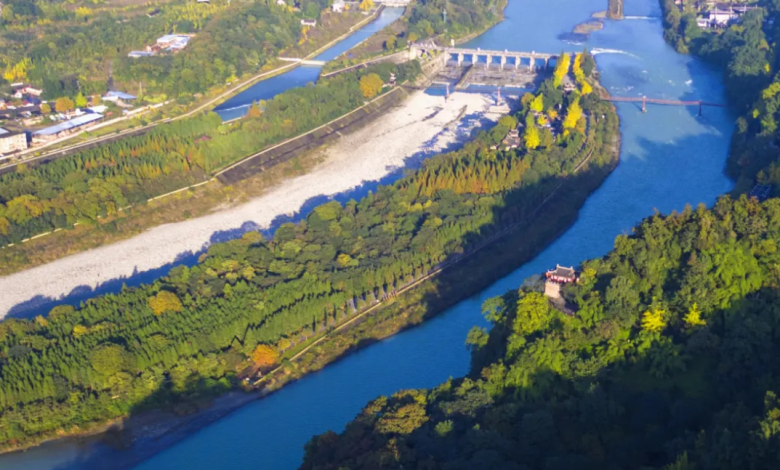
The Dujiangyan Irrigation System, located in Sichuan Province, China, is one of the world’s oldest and most remarkable hydraulic engineering projects. Built in 256 BCE during the Qin Dynasty, it was designed by Li Bing, a governor and engineer, to control flooding and irrigate the fertile Chengdu Plain. Unlike modern dams, Dujiangyan uses a natural, eco-friendly approach to divert water, making it a UNESCO World Heritage Site since 2000.
Still fully operational today, the system irrigates over 5,300 square kilometers of farmland, supporting millions of people. Its ingenious design—without dams—has inspired engineers worldwide. This article explores its history, engineering principles, and lasting impact.
2. Historical Background and Construction
2.1 The Problem: Flooding and Drought
Before Dujiangyan, the Min River frequently flooded, destroying crops, while other regions suffered droughts. Li Bing’s solution was to tame the river, not block it.
2.2 Key Innovations
The system consists of three main components:
- Yuzui (Fish Mouth Levee) – Divides the river into inner (narrow, deep) and outer (wide, shallow) channels.
- Feishayan (Flying Sand Weir) – Redirects sediment to prevent clogging.
- Baopingkou (Bottle-Neck Channel) – Controls water flow into irrigation canals.
Unlike dams, which disrupt ecosystems, Dujiangyan works with nature, ensuring long-term sustainability.
3. Engineering Brilliance: How It Works
3.1 Water Division and Sediment Control
- Yuzui splits the river, sending 60% of water to irrigation and 40% to flood discharge.
- Feishayan uses centrifugal force to expel 90% of sediment, keeping canals clear.
3.2 No Dams, No Reservoirs
Modern dams often harm fish migration and riverbeds. Dujiangyan avoids this by using natural slopes and curves, maintaining the river’s health.
4. Impact on Agriculture and Civilization
4.1 Transforming the Chengdu Plain
- Turned Sichuan into “The Land of Abundance” (天府之国).
- Supports 67% of Sichuan’s farmland today.
- Increased rice production, fueling population growth.
4.2 A Model for Sustainable Development
UNESCO praises Dujiangyan for its harmony with nature, contrasting modern megaprojects that often damage ecosystems.
5. Tourism and Cultural Legacy
5.1 A Must-Visit Heritage Site
- Over 3 million visitors annually.
- Key attractions: Erwang Temple (honoring Li Bing), Anlan Bridge, and the system’s main structures.
5.2 Influence on Modern Engineering
- Inspired water projects in Japan, Korea, and the Netherlands.
- Studied by UNESCO as a model for eco-hydraulics.
6. Conclusion: A Timeless Masterpiece
Dujiangyan stands as a 2,200-year-old testament to human ingenuity and sustainability. Unlike many ancient structures, it remains fully functional, proving that engineering can work with nature, not against it. As climate change threatens water security, Dujiangyan’s principles offer valuable lessons for the future.
Key Facts at a Glance
✔ Built: 256 BCE (Qin Dynasty)
✔ Designer: Li Bing
✔ Still in Use: Irrigates 5,300+ km²
✔ UNESCO Status: World Heritage Site (2000)
✔ Annual Visitors: 3+ million