


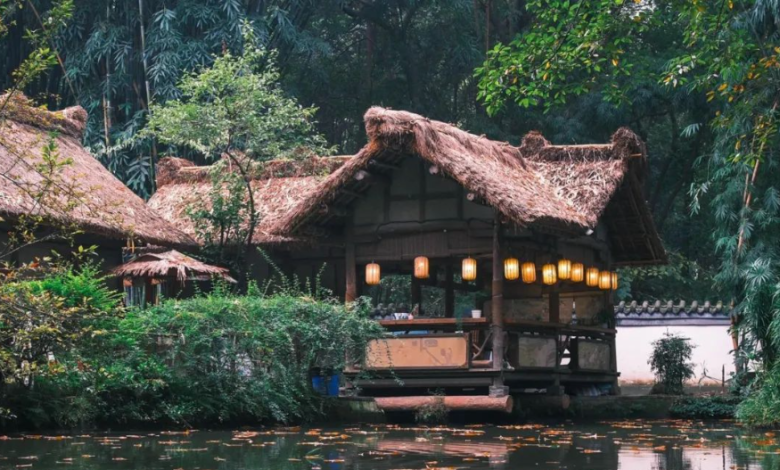
Nestled in the heart of China’s Sichuan Basin, Chengdu is a city where urban vitality harmonizes effortlessly with natural beauty. Known as the “Land of Abundance,” it boasts a mild climate, fertile soil, and a landscape that has inspired poets and painters for centuries. Among its many natural wonders, the imagery of peach blossoms and flowing water stands out as a timeless symbol of Chengdu’s serene and poetic charm. These elements not only reflect the city’s idyllic scenery but also embody its cultural spirit—a blend of tranquility, resilience, and effortless elegance.
The Enchantment of Peach Blossoms
Every spring, Chengdu transforms into a pastel dreamland as peach blossoms blanket the city’s parks, riversides, and countryside. The delicate pink petals symbolize renewal and joy in Chinese culture, evoking a sense of fleeting beauty that resonates deeply with Chengdu’s laid-back, pleasure-loving ethos.
One of the best places to admire this floral spectacle is Longquan Mountain, located just outside the city. Every March, the hillsides burst into a sea of pink, attracting visitors who come to stroll through the blossoms, picnic under the flowering trees, and capture the ephemeral beauty in photographs. The Peach Blossom Festival held here celebrates not just the flowers but also Chengdu’s agricultural heritage, with local farmers selling fresh peaches, honey, and traditional snacks.
Even within the city, peach blossoms add a touch of romance to everyday life. In Taiguli (Taikoo Li), a trendy shopping district, modern architecture is softened by the presence of blooming peach trees, creating a striking contrast between the contemporary and the timeless. Similarly, Huanhuaxi Park and Baihuatan Park feature winding paths lined with peach trees, where locals practice tai chi, sip tea, or simply sit and admire the petals drifting in the breeze.
The peach blossom’s cultural significance runs deep. In Chinese literature, it often represents love and prosperity. The famous Tang Dynasty poet Cui Hu wrote of a chance encounter with a maiden under a peach tree, a tale later immortalized in the verse: “Last year, on this very day, within this very door, her face and the peach blossoms mirrored each other’s glow.” This imagery of blossoms and youthful beauty remains a recurring theme in Chengdu’s artistic expressions, from Sichuan opera to contemporary music.
The Poetry of Flowing Water
If peach blossoms embody Chengdu’s delicate beauty, then its flowing waters represent its enduring vitality. Crisscrossed by rivers and canals, Chengdu has been shaped by water for over 2,000 years. The Dujiangyan Irrigation System, a UNESCO World Heritage Site, is a testament to ancient ingenuity—a hydraulic engineering marvel that tamed the Min River’s floods and turned the Chengdu Plain into one of China’s most fertile regions.
The Jinjiang River, which meanders through the city, is Chengdu’s lifeline. Along its banks, weeping willows dip their branches into the water, while stone bridges and teahouses create scenes reminiscent of classical ink paintings. At dawn, mist rises from the river, blending with the morning light to create an almost ethereal atmosphere. By evening, the water reflects the glow of lanterns, as locals gather for leisurely strolls or boat rides.
Another iconic waterway is the Fu and Nan Rivers, which encircle the city center. These rivers are not just scenic but also integral to Chengdu’s identity. The Anshun Bridge, illuminated at night, arches gracefully over the Fu River, while the nearby Dongmen Dock offers cruises that showcase the city’s skyline. Along the Nan River, the Jiuyanqiao (Nine-Eyes Bridge) is a popular spot for nightlife, where bars and cafes spill out onto the waterfront, blending modern energy with natural tranquility.
Water also plays a central role in Chengdu’s gardens, which are designed to mimic the harmony of nature. The Wangjianglou Park (River Viewing Tower Park) is a masterpiece of classical landscaping, where bamboo groves, pavilions, and winding streams create a meditative retreat. Here, the poet Xue Tao, one of China’s most celebrated female writers, once drew inspiration from the murmuring brooks and composed verses that still resonate today.
A Symphony of Nature and Culture
What makes Chengdu truly special is how seamlessly its natural elements intertwine with daily life and culture. The peach blossom and flowing water are not just scenery—they are part of the city’s soul. In teahouses, locals sip jasmine tea while watching koi fish dart under lily pads. In the outskirts, farmers tend to peach orchards, their labor yielding fruits as sweet as the blossoms are beautiful. Even the city’s cuisine, with its fiery hotpots and delicate dandan noodles, is shaped by the land’s fertility and the rivers’ abundance.
Chengdu’s natural charm also inspires its artistic traditions. The Sichuan embroidery, known for its intricate floral motifs, often features peach blossoms, while traditional pipa (lute) music mimics the sound of babbling brooks. The city’s love for nature is perhaps best encapsulated in the saying: “In Chengdu, one can live without meat, but not without bamboo or flowers.”
Conclusion: A Timeless Allure
Chengdu’s peach blossoms and flowing water are more than just picturesque—they are symbols of a city that values balance, beauty, and the simple joys of life. In a rapidly modernizing China, Chengdu remains a haven where nature and humanity coexist in harmony. Whether wandering through a misty riverside park or savoring the brief but glorious bloom of peach trees, visitors and residents alike are reminded of the enduring allure of Chengdu’s natural charm.


