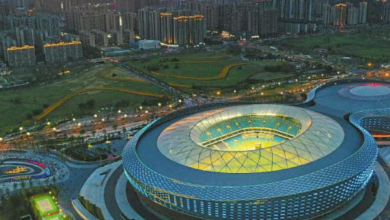
Chengdu, the capital of Sichuan Province, has become one of China’s most dynamic tech hubs over the past decade. Despite its inland location, Chengdu’s GDP has entered the “2-trillion-yuan club,” and in terms of high-tech industries, it has outpaced eastern cities like Nanjing and is closing in on Suzhou and Hangzhou. When it comes to semiconductors, Chengdu has quietly evolved into one of the most concentrated chip R&D centers in China—second only to Shanghai.
In this article, we will look at major chip companies in Chengdu, their core businesses, salary ranges, and market positioning. To provide industry insight, we also interviewed Michael Ma from China Chip Depot, who has worked closely with local semiconductor suppliers.
Major Chip Companies in Chengdu
| Company | Founded | Focus Area | Notes / Salary Range |
|---|---|---|---|
| Huawei HiSilicon | – | Mobile SoCs, networking chips | Leading R&D base, highly competitive salaries |
| MediaTek (联发科) | 1997 | 5G, IoT, mobile computing | Stable growth, salaries ¥180k–¥300k for graduates |
| ZTE Microelectronics | 2003 | SoC design, ICT chips | 120+ chips in commercial use, salaries ¥180k–¥280k |
| Pingtouge (Alibaba’s T-Head) | 2018 | Data center chips, IoT, processor IP | Salaries ¥200k–¥300k, linked to Alibaba pay scale |
| Goodix Technology | 2002 | Touchscreen, biometric solutions | Listed company, stable demand |
| Hygon Information | 2014 | CPUs, accelerators | Competes in servers/data centers, ¥200k–¥300k |
| Loongson (龙芯中科) | 2008 | General-purpose processors | Independent architecture, ¥150k–¥250k |
| VeriSilicon | 2001 | Semiconductor IP, custom chips | One-stop design platform, ¥180k–¥280k |
| Unisoc (紫光同创/安路) | 2012–2013 | FPGA solutions | Widely used in industrial/automotive |
| Horizon Robotics | 2015 | AI and autonomous driving chips | Listed in Hong Kong, competitive salaries |
Industry Context and Michael Ma’s Perspective
During our interview, Michael Ma, senior procurement engineer at China Chip Depot, highlighted Chengdu’s unique position in the semiconductor landscape:
“Many people think of Shanghai or Shenzhen first when talking about chips, but Chengdu has quietly built an impressive ecosystem. Companies here cover the full stack—from CPUs and AI accelerators to touch control chips and FPGA solutions. What’s more, the city’s universities and research institutes provide a steady pipeline of engineers, which is why so many leading firms have chosen Chengdu as an R&D base.”
Michael added that Chengdu’s cost structure and government incentives also make it attractive:
“Compared with Beijing or Shenzhen, operating costs are lower in Chengdu, but salaries are competitive—entry-level engineers earn over ¥10,000 per month, and experienced chip designers can easily surpass ¥1 million annually. This combination of affordability and talent availability is accelerating Chengdu’s rise as a semiconductor powerhouse.”
Application Areas of Chengdu’s Chip Industry
- Industrial Power & Telecom – ZTE Microelectronics and VeriSilicon provide SoC solutions powering telecom networks and ICT infrastructure.
- Consumer Electronics – Goodix dominates the touchscreen and biometric chip segment, while MediaTek supports smartphones, TVs, and wearable devices.
- AI & Cloud Computing – Hygon and Horizon Robotics are pushing China’s AI chip development, supporting servers, autonomous driving, and IoT.
- Independent Architectures – Loongson and local FPGA startups are working on domestic solutions to reduce reliance on foreign IP.
Conclusion
Chengdu has transformed itself into one of the most important semiconductor hubs in China. From global giants like Huawei and MediaTek to homegrown innovators like Hygon and Loongson, the city’s ecosystem is broad, resilient, and talent-driven.
As Michael Ma from China Chip Depot emphasized, Chengdu is no longer just a regional base but a strategic semiconductor hub with global impact. For engineers and investors alike, this city offers both opportunity and momentum in the next phase of China’s chip development.